Introduction
The journey began with the development of an internal tool leveraging verifiable credentials, rooted in Affinidi's core technology. What started as an internal solution quickly evolved into a suite of products with the potential to transform how organisations foster employee engagement and culture.
Through collaboration with People, Product, and Engineering teams, we explored new ways to enhance workplace connections by:
Enabling seamless peer-to-peer recognition.Shifting from a top-down company narrative to an employee-first culture through a reimagined organisation chart.
Redefining workplace relationships by fostering cross-team connections beyond job roles.
Design Problem
How might we use employee and organisational data to foster a culture that is supportive, employee-centric, and empowers individuals to manage their career growth?
Outcome
Our product successfully launched across Singapore, India, and Europe, leading to a significant cultural shift within the company. Notable results included:
43% increase in peer-to-peer recognition across the organisation.
Employees describing the product as “BambooHR but with a better user experience and interface.”
From Discovery to MVP
Our approach followed the belief that Features → Action → Mindset → Culture. By designing based on user needs and stakeholder vision, we could drive behavioral changes that ultimately reshape company culture.
After conducting stakeholder and internal user interviews, we prioritised rapid experimentation by launching a Minimum Viable Product (MVP). The MVP's primary goal was to allow employees to carry their career credentials and achievements with them anywhere.
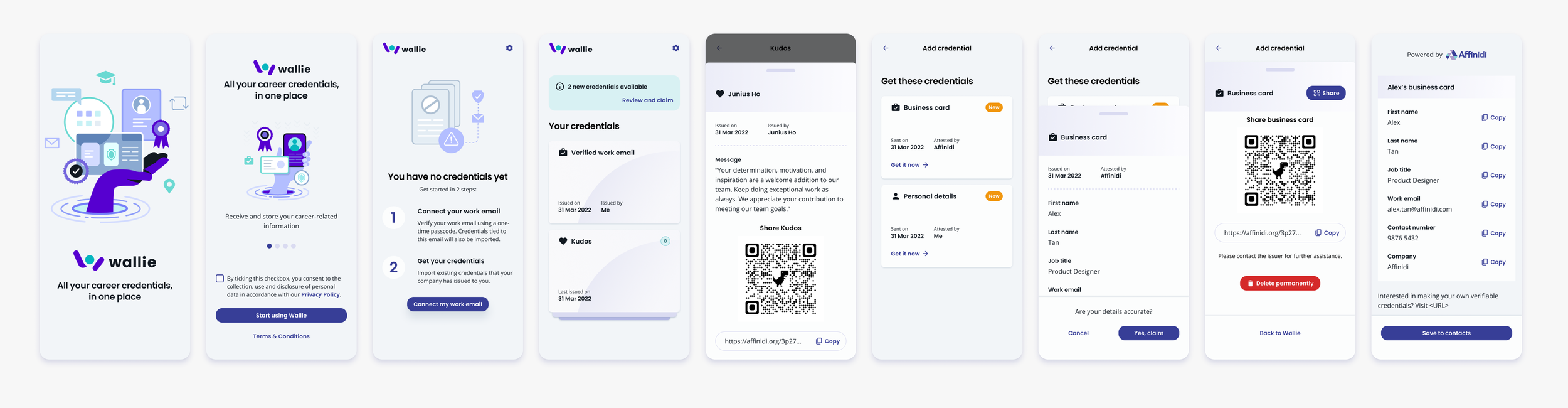
Introducing Wallie – A Trusted Digital Wallet
Wallie was designed as a secure digital wallet using Self-Sovereign Identity (SSI) technology to empower employees to own, share, and manage their professional information. Key features included:
Kudos & Career Credentials – Employees could receive, store, and share peer recognition and career-related information.
BambooHR Integration – Transforming existing HR data into useful, employee-first assets, starting with a digital business card.
Verifiable Credentials (VCs) – A trusted, secure method for sharing professional information.
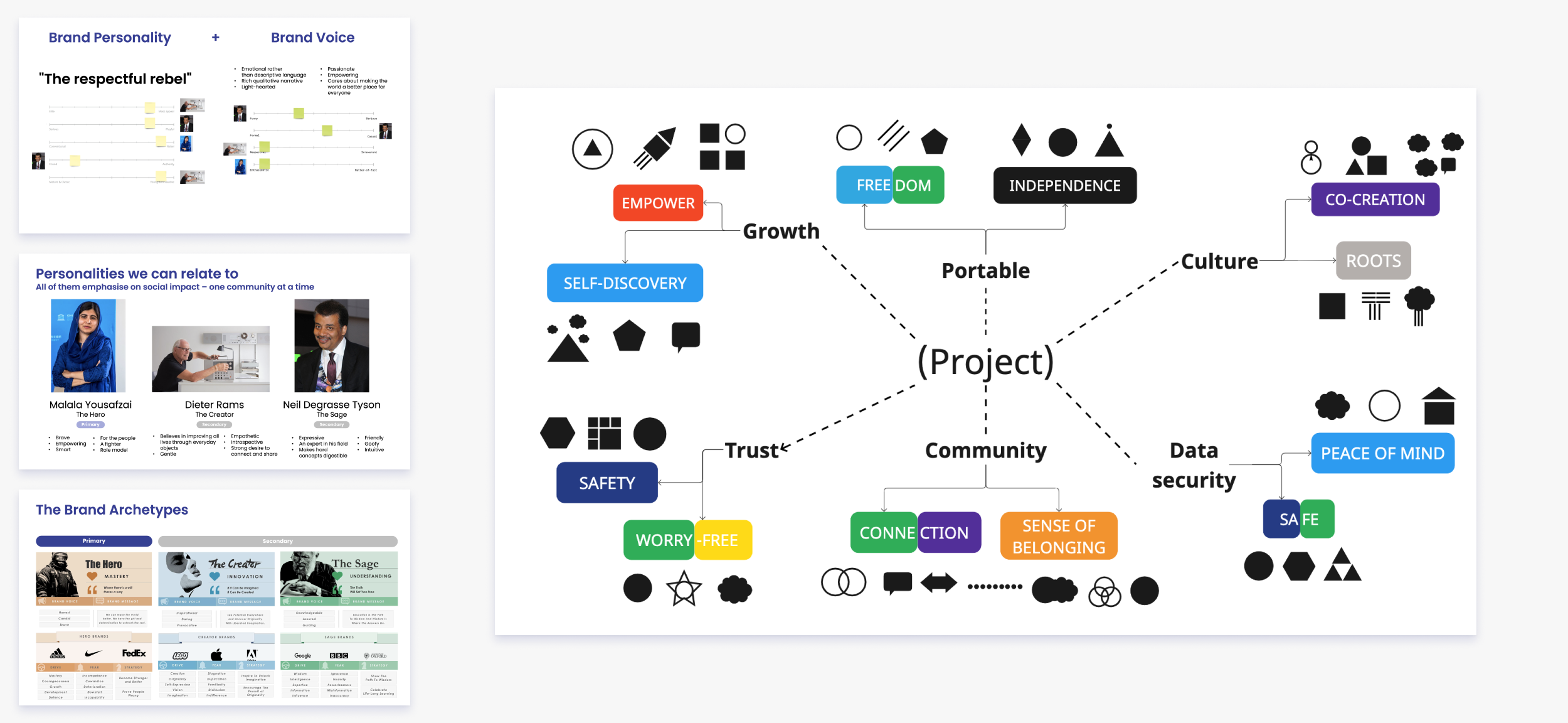
Branding and visual design
Despite initial traction, research revealed a lack of brand awareness among employees, impacting engagement. To address this, I led a branding strategy and internal marketing initiative in collaboration with the Community team.
Through a brand workshop, we gathered insights from cross-functional teams to align on:
Brand personality, values, and tone of voice
Visual identity elements (keywords, colors, icons)
A strategic roadmap for internal awareness
This initiative empowered employees to shape the product’s brand identity and increased adoption by ensuring a recognisable and consistent visual experience.
Enhancing Engagement Through Design
User feedback revealed opportunities to refine the experience. Notable improvements included:
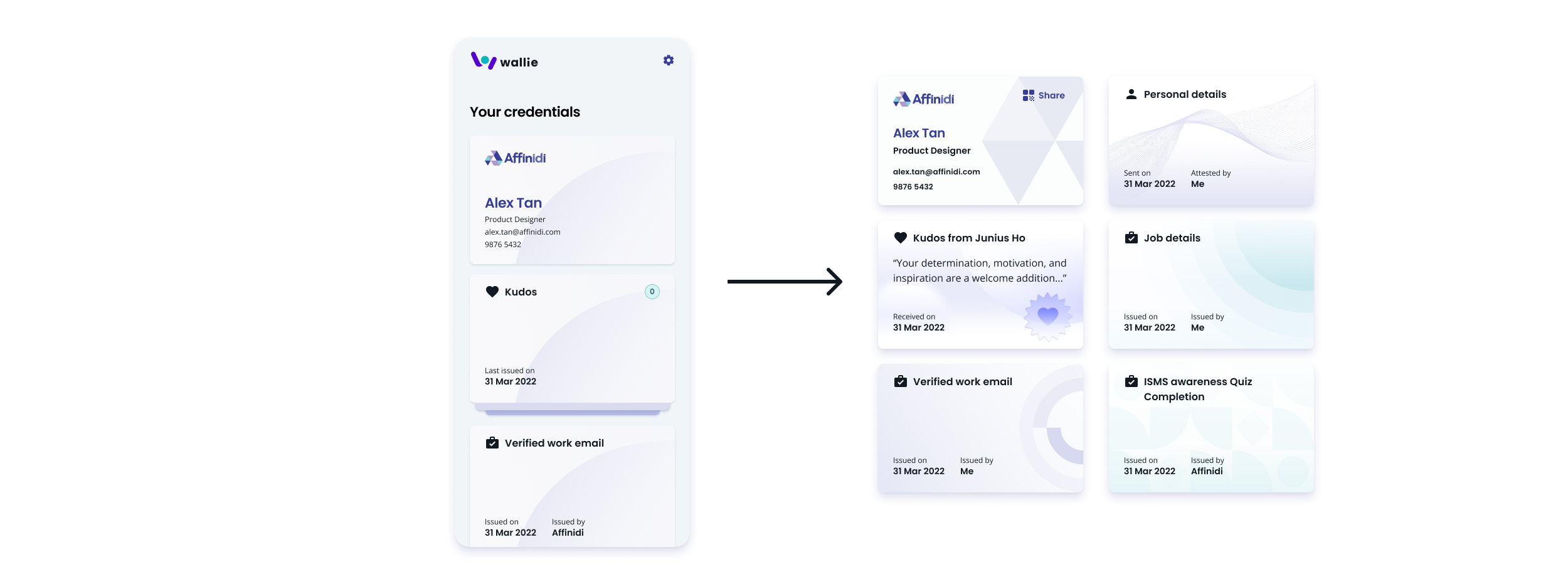
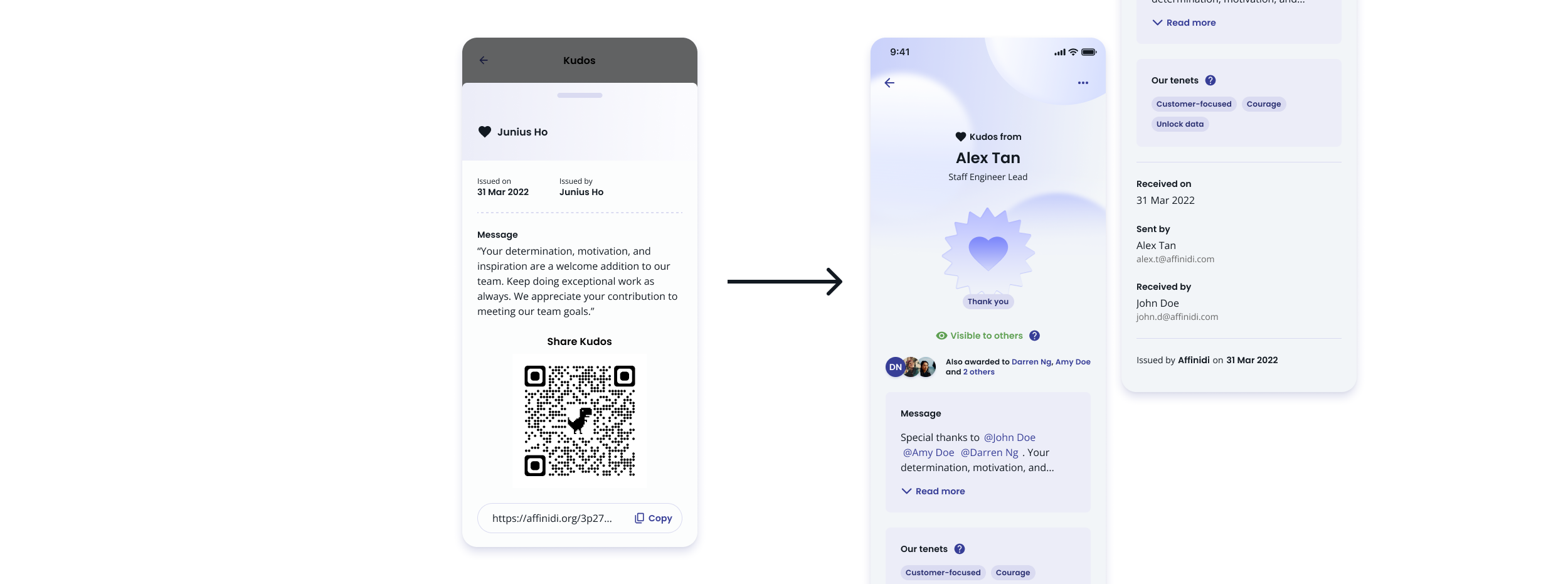
Credential Cards
Inspired by real-world business cards (like credit cards in Apple Pay) to improve recognition and ease of sharing.
Added issuer details and message snippets to provide better context.
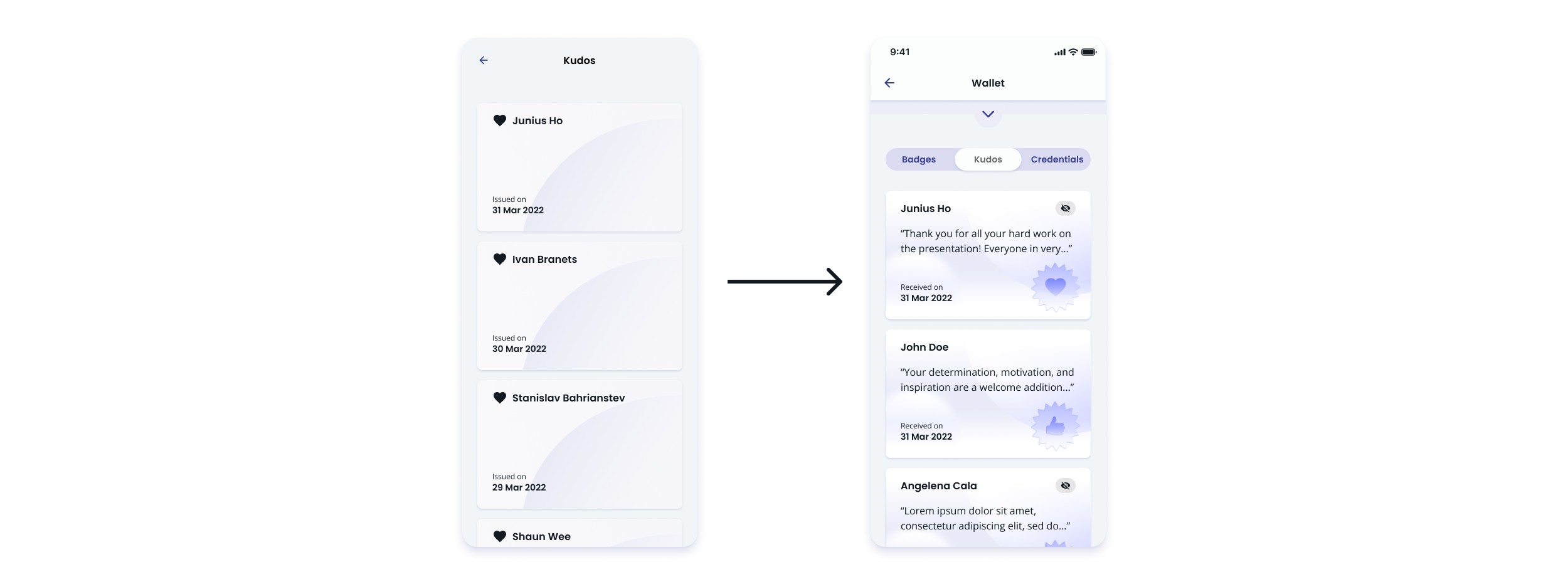
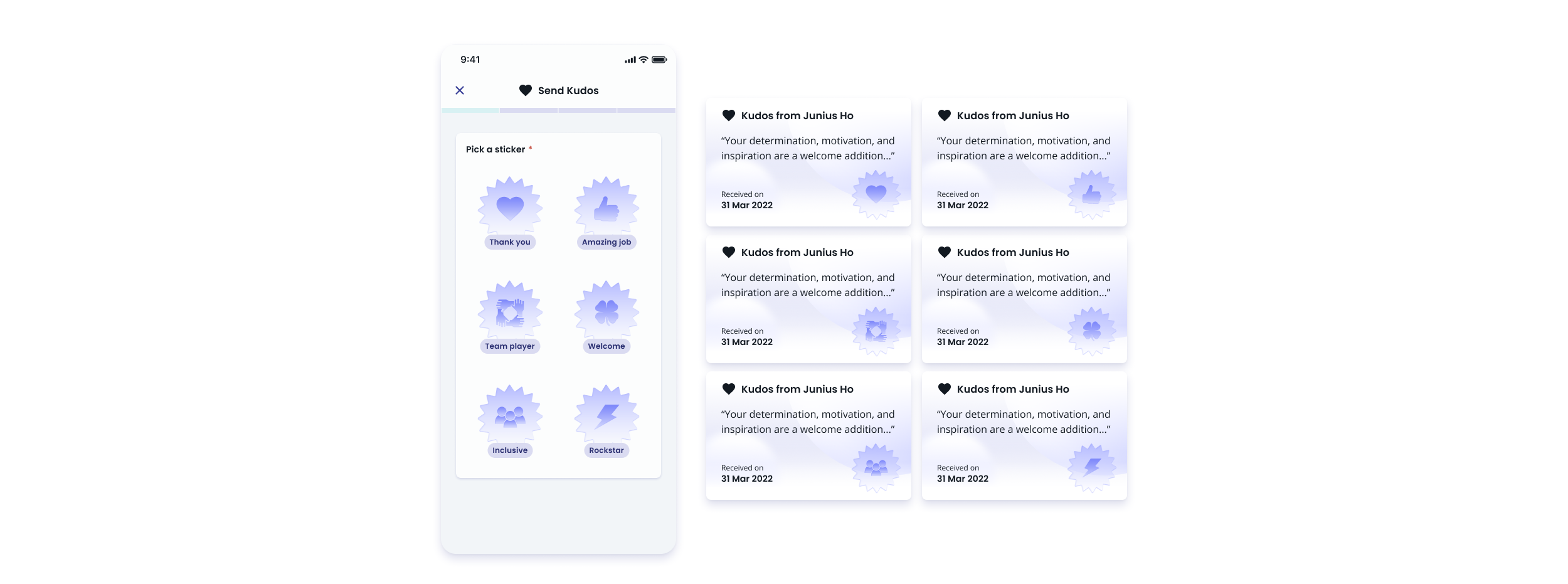
Kudos Stickers
Gamified peer recognition by categorising past Kudos themes and validating them via guerrilla testing.
Enhanced personal touch with themed stickers, increasing engagement and emotional impact.
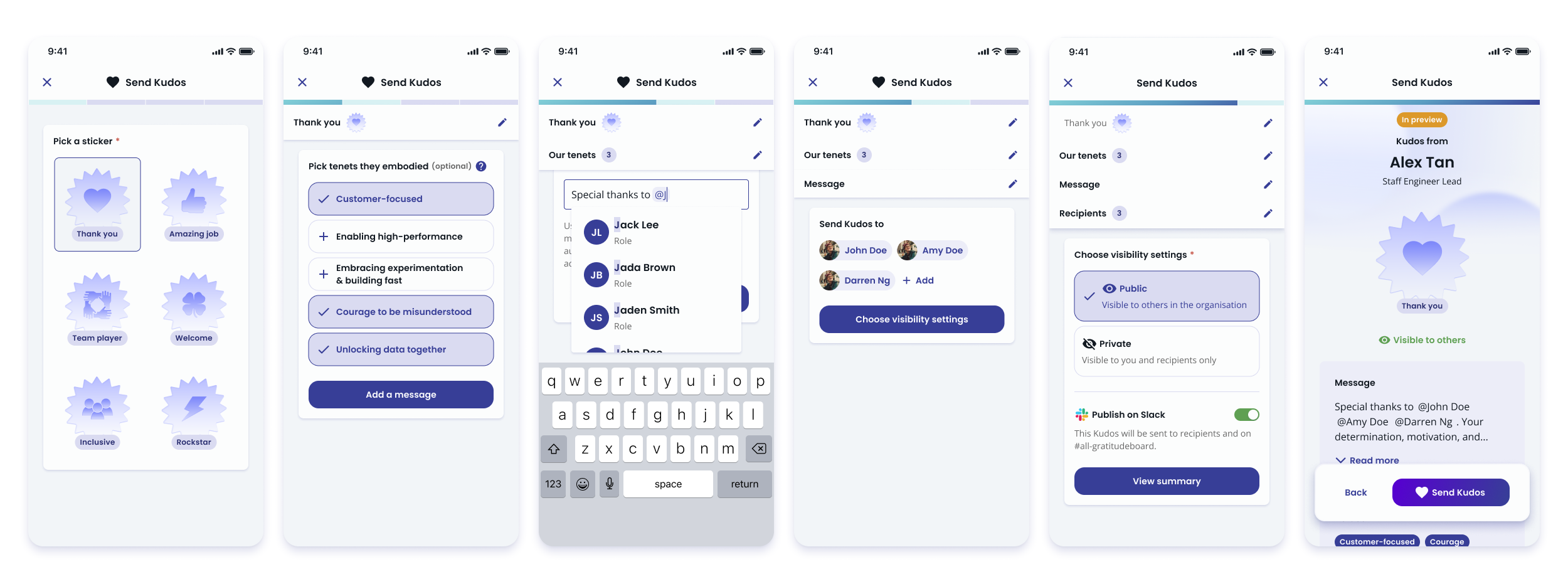
Privacy Controls and Personalisation
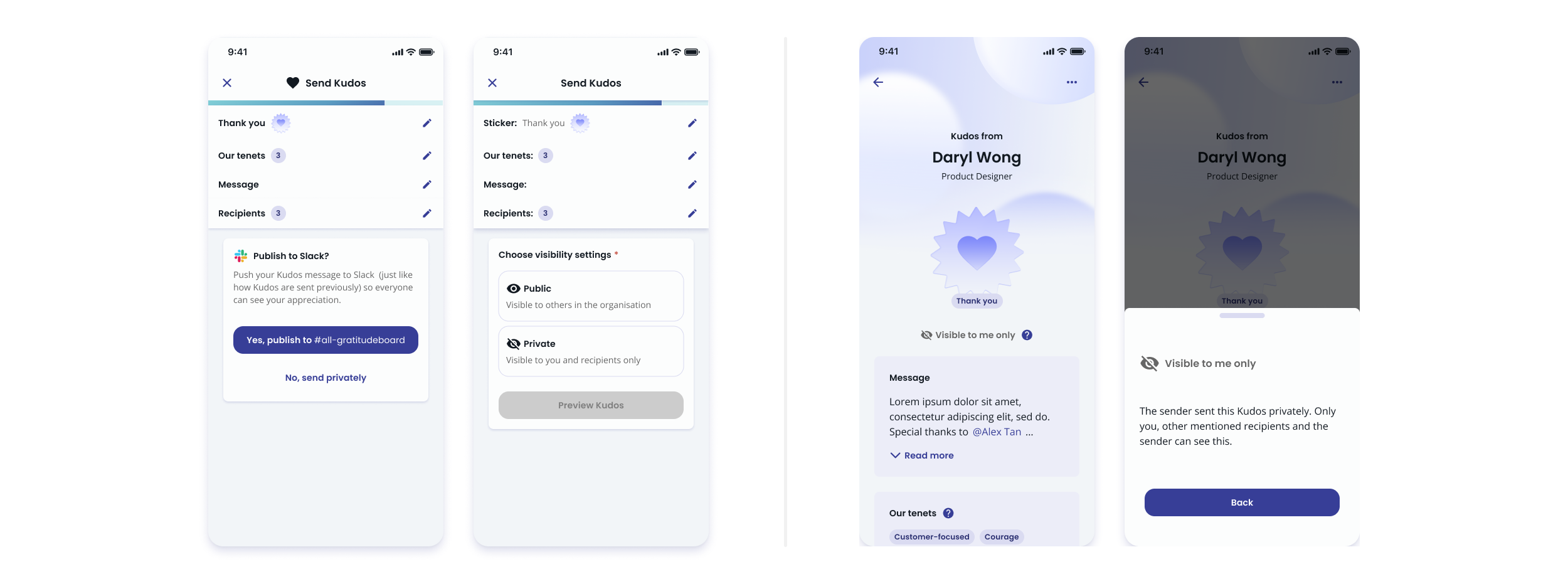
Some employees preferred private appreciation over public recognition.
Introduced visibility settings for Kudos, allowing users to control what is publicly visible.
Kudos are now linked to personalised company tenets, infusing company values into everyday appreciation.
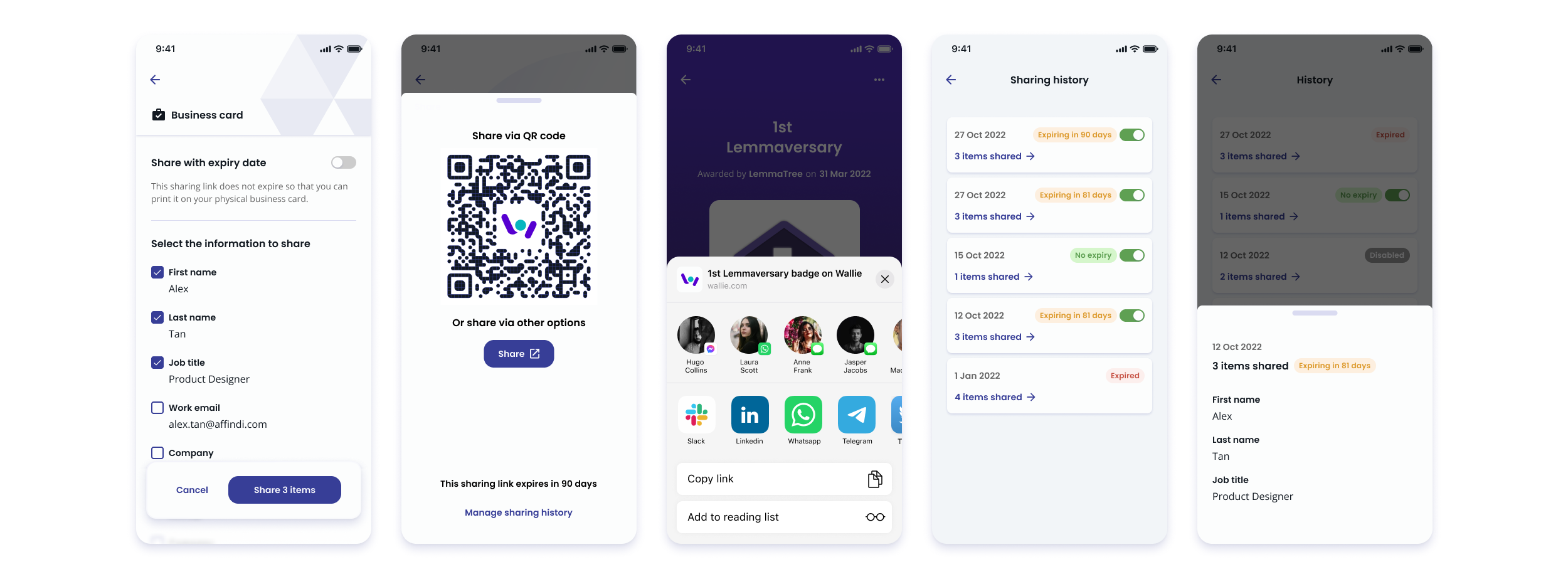
Improved Shareability & Access Control
Enabled selective sharing of credentials, allowing users to choose specific details for different audiences (e.g., clients vs. peers).
Introduced link expiry and share history tracking to enhance security.
Moved the QR code to the top and integrated native social sharing for frictionless engagement.
Enhancing Discoverability & Engagement
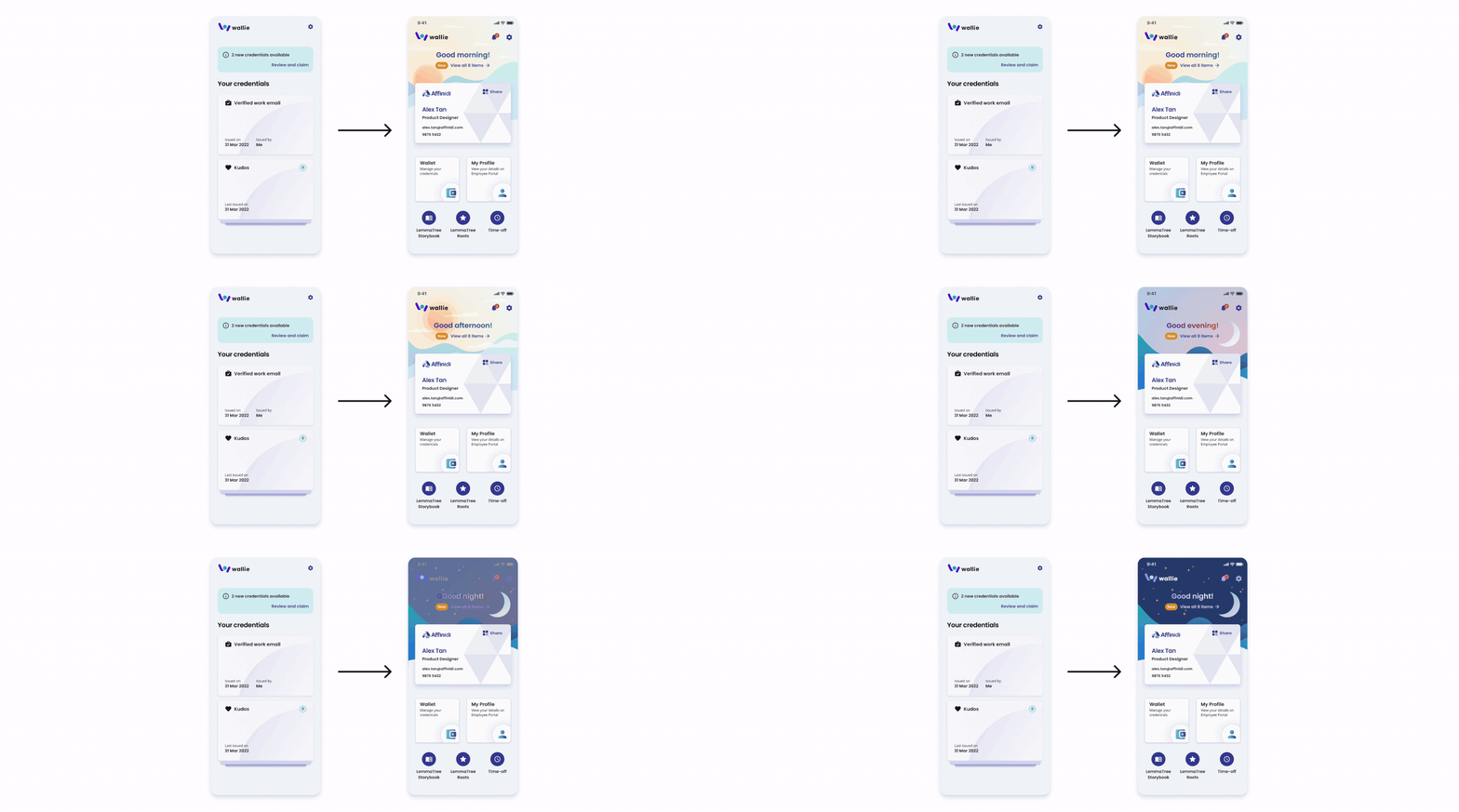
With the feature list growing, I took the opportunity to improve feature organisation by redesigning the homepage for better discoverability and engagement.
Addressed stakeholder goals of making Wallie a central hub by:
Conducting a card sorting exercise with researchers to inform the Information Architecture.
Conducting guerrilla testing which revealed employees’ top request: time-off functionalities and company handbooks.
Revamp results: streamlined navigation, refreshed platform, and increased engagement with a sprinkle of delight.
Scaling Beyond the App: The Employee Portal
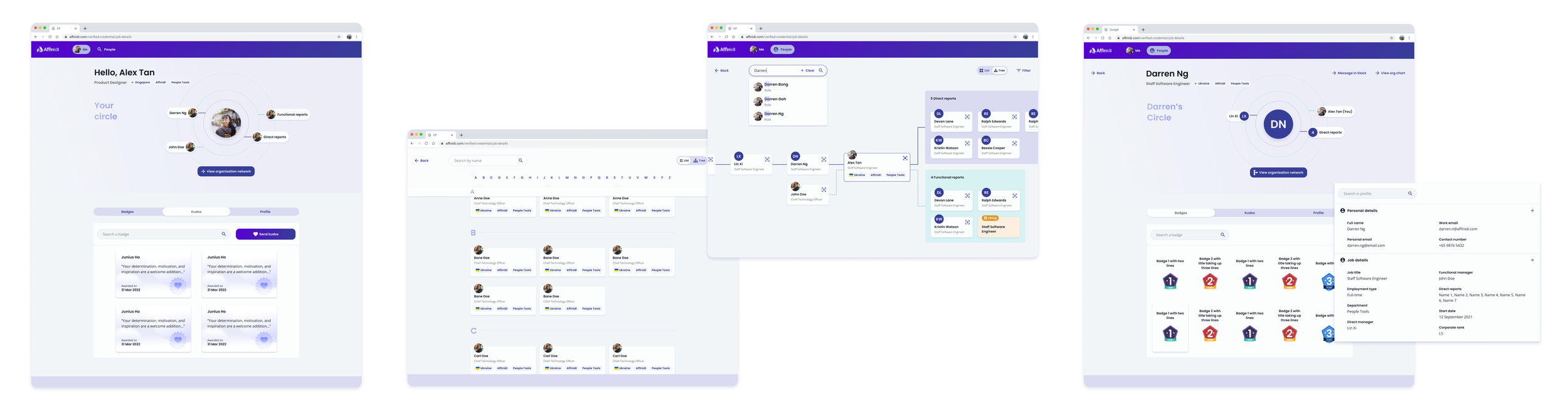
As adoption grew, we extended the product ecosystem by launching an Employee Portal—a web-based extension designed to further strengthen workplace relationships.
Key features included:
A reimagined org chart shifting from a hierarchical structure to a flat, employee-centric network.
Expanded relationship definitions, recognizing friendships and professional circles beyond job scope.
Collaborations with the People team to integrate engagement initiatives and company values.
Mentorship & Employee Engagement Initiatives
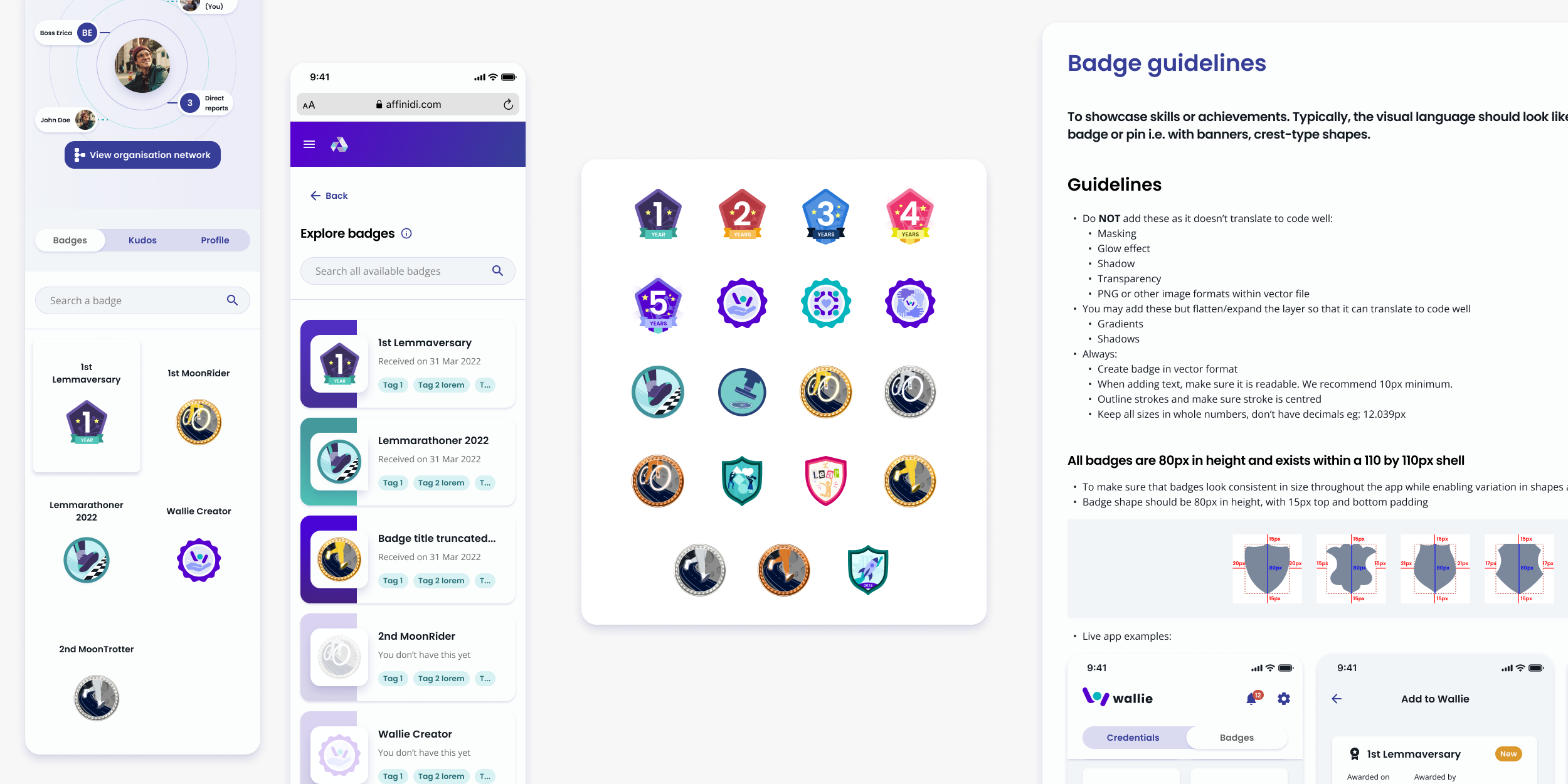
Collaborated with People and Employee Engagement teams to design engagement badges.
Mentored interns, teaching Figma basics and guiding them in badge creation.
Co-led brainstorming sessions for inter-company engagement campaigns.
Developed onboarding guidelines for interns, fostering a collaborative and creative environment.
Empowered employees to contribute meaningfully and take pride in their work.
Venturing Beyond Our Organization
Beyond internal adoption, we explored external applications by collaborating with a change management consulting firm to develop a Proof of Concept (PoC) within three months.
The concept focused on transforming professional learning and fostering a truly employee-empowered learning environment. The client was impressed, leading to discussions for a potential long-term partnership.
How might we help organisations become a truly employee-empowered learning organisation, and set a new standard for professional learning?

The Circle: A Unifying Design Philosophy
To ensure a cohesive product experience, I introduced a design philosophy inspired by Pythagoras' concept of circles—symbolizing unity, continuity, and growth. This philosophy guided:
The evolution of employee relationships and culture-building initiatives.
Gamification strategies, drawing inspiration from “Harry Potter: Wizards Unite” and “Pokémon GO” to drive engagement through learning maps and badges.
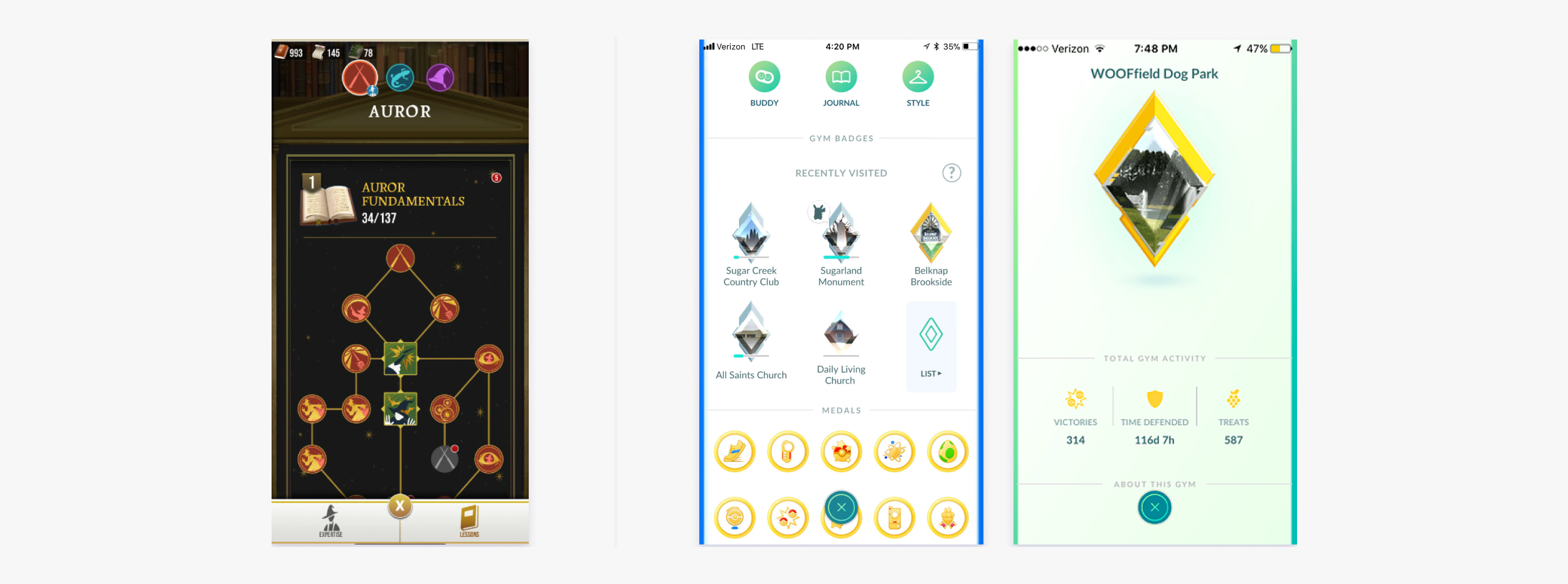
References: “Harry Potter: Wizards Unite” learning map | “Pokemon GO” badges
Results & Impact
Our research-driven and cross-functional approach laid the groundwork for fostering a more connected and employee-centric workplace culture. Despite challenges in personalizing profiles and refining organizational layouts, we achieved:
43% increase in peer-to-peer recognition.
A more engaging and intuitive platform, validated by employee feedback.
Key Learnings
Creating personalized digital profiles strengthens workplace connections and fosters a sense of belonging. For example, employees could personalize their profiles with details like their favourite colour, or coffee preference, helping colleagues choose thoughtful appreciation gifts.
Launching an MVP early enabled rapid learning and iteration.
Cross-functional collaboration (Design, Community, Engineering, People, Stakeholders) led to a holistic solution.
Inclusive design practices through workshops encouraged a sense of ownership and alignment across teams.
By focusing on empowerment, engagement, and evolution, we transformed workplace culture through design-driven innovation.